The short answer
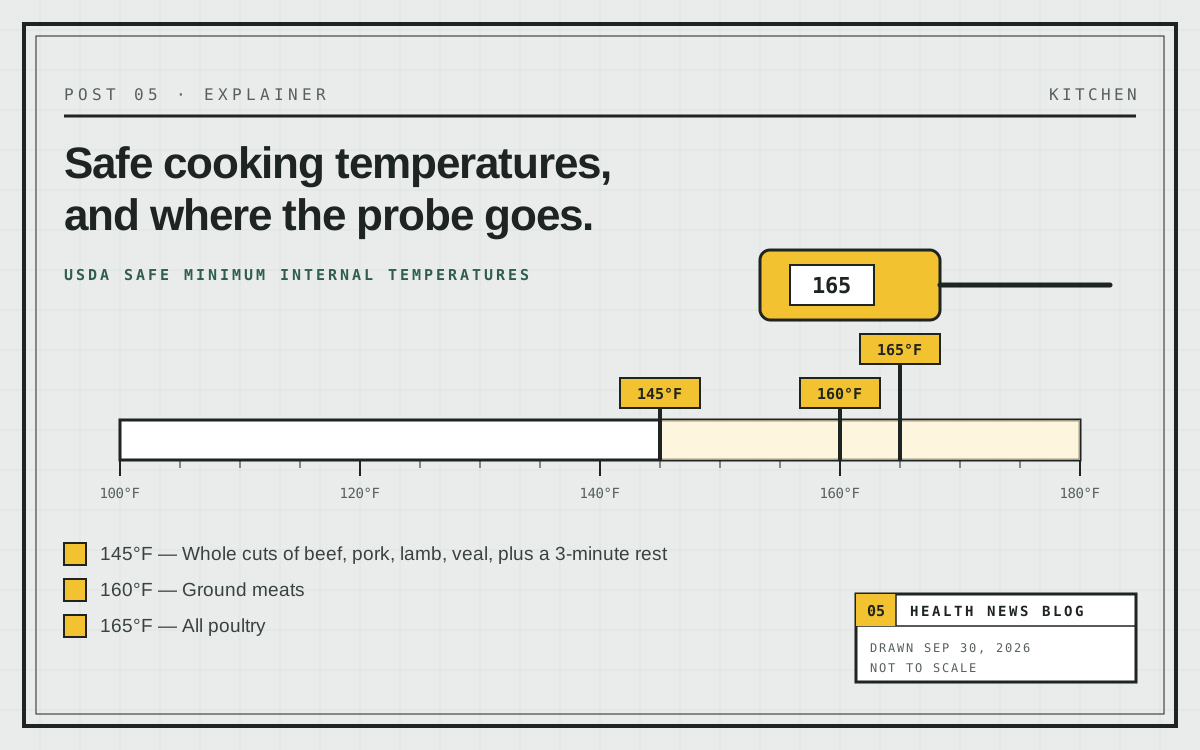
USDA's Food Safety and Inspection Service lists three numbers that cover most home cooking: 145°F for whole cuts of beef, pork, veal and lamb, followed by a rest of at least 3 minutes; 160°F for ground meats; and 165°F for all poultry, including ground poultry and stuffing. The FDA's chart gives the same three figures. Each is an internal temperature taken with a food thermometer in the thickest part of the food, and the rest is part of the first number, not a garnish.
The numbers, in one table
FSIS's Safe Minimum Internal Temperature Chart tells cooks to bring food to these temperatures, as measured with a food thermometer, before removing it from the heat source, and notes that you may cook to higher temperatures for personal preference.[1] The rows below are FSIS's; the FDA's safe food handling page lists matching values for whole cuts, ground meat, poultry, fin fish, egg dishes, uncooked ham, leftovers and casseroles.[2]
| Food (FSIS wording) | Minimum internal temperature | Rest |
|---|---|---|
| Beef, pork, veal and lamb steaks, chops and roasts | 145°F (62.8°C) | At least 3 minutes |
| Ground meats | 160°F (71.1°C) | — |
| All poultry (breasts, whole bird, legs, thighs, wings, ground poultry, giblets and stuffing) | 165°F (73.9°C) | — |
| Ham, fresh or smoked (uncooked) | 145°F (62.8°C) | At least 3 minutes |
| Fully cooked ham, to reheat | 140°F if packaged in a USDA-inspected plant; 165°F otherwise | — |
| Eggs | 160°F (71.1°C) | — |
| Fish and shellfish | 145°F (62.8°C) | — |
| Leftovers; casseroles | 165°F (73.9°C) | — |
The FDA's version adds visual cues where a thermometer is impractical: shrimp, lobster and crab until the flesh is pearly and opaque, clams, oysters and mussels until the shells open, and whole eggs until yolk and white are firm.[2]
Color is not on the chart. The FDA says color and texture are unreliable indicators, and that a food thermometer is the only way to confirm meat, poultry, seafood and egg products have reached a safe minimum internal temperature, the point the agency ties to destroying harmful bacteria.[2]
Why the rest is part of the number
For whole cuts and uncooked ham, FSIS writes the rest into the same cell as the temperature: 145°F “and allow to rest for at least 3 minutes.”[1] Read literally, a pork chop that hits 145°F and is sliced at once has not met the line as written. The rest means the meat comes off the heat and sits, uncut, for at least three minutes before carving or eating.
The FDA uses the same idea for microwave cooking under a different name: always allow standing time, which “completes the cooking,” before checking the internal temperature.[2] Ground meat and poultry have no rest listed; for those, the temperature on its own is the target.
Where the probe goes, step by step
A thermometer measures the spot its sensor sits in, which is why placement matters as much as the number.
Aim for the thickest part
Penn State Extension's guidance is to insert the thermometer into the thickest part of the food.[3] Aim for the tip to sit in the middle of that thickest part, not near the surface.
Keep clear of bone
University of Illinois Extension's turkey guidance places the tip in the thick part of the thigh, away from the bone.[4]
Check more than one spot
Penn State recommends checking in two locations to make sure the temperature has been reached.[3] For a whole bird, Illinois Extension says to check the innermost part of the thigh and wing and the thickest part of the breast, and to confirm a pop-up indicator with a thermometer.[4]
Handle thin foods at the tip
Penn State notes that digital instant-read thermometers are easier to use in thin foods such as burgers or cutlets because the measuring zone is at the tip.[3] Push in far enough that the tip is at the center, not near the surface.
Wait for the reading to settle
Penn State gives digital instant-read thermometers about two to ten seconds and dial (bimetallic) stem thermometers at least 15 seconds in the food before a final reading.[3]
Check that the thermometer reads true
A thermometer that reads a few degrees high will tell you a chop is done before it is. Penn State Extension describes two checks.[3]
- Ice water, 32°F. Fill a large glass to the top with crushed ice, add water, stir, and insert the stem in the center without touching the sides or bottom. After 15 to 30 seconds it should read 32°F.[3]
- Boiling water, 212°F. Same idea in a pot at a rolling boil, again without touching the pot. Water boils at a lower temperature as elevation rises, so at altitude expect less than 212°F.[3]
- Adjusting. Dial thermometers usually have a calibration nut under the head that you turn with a small wrench while the stem sits in the ice water. Penn State says digital thermometers generally cannot be recalibrated but should still be checked; Illinois Extension notes that some digital models have a calibration button and suggests changing the battery.[3][4]
- How close is close enough. Illinois Extension considers a thermometer accurate if it reads within two degrees either way.[4] If yours is further off and cannot be adjusted, note the offset or replace it.
- Cleaning. Wash the stem with soap and warm water after each use, since it touches raw food.[3]
After cooking: the cold side of the chart
The same FDA page covers what happens next. Keep the refrigerator at 40°F or below and the freezer at 0°F or below, checked with an appliance thermometer; refrigerate cooked food within 2 hours, or within 1 hour if it is above 90°F outside; and divide large amounts of leftovers into shallow containers so they cool faster. When reheating, the FDA says to bring sauces, soups and gravy to a boil, and FSIS lists 165°F for leftovers.[1][2]
A kitchen thermometer is a household tool, not a medical device, and this post summarizes public guidance rather than replacing it. Follow the manufacturer's manual for your thermometer's range, care and any calibration feature. If you have a health concern related to food, ask a clinician or your local health department; USDA also runs a Meat and Poultry Hotline listed on the FSIS site.[1]
Sources
- USDA Food Safety and Inspection Service. Safe Minimum Internal Temperature Chart. Last updated April 14, 2025. fsis.usda.gov. The live page refused automated requests on September 30, 2026; we read it through the Internet Archive's copy captured September 26, 2026: web.archive.org
- U.S. Food and Drug Administration. Safe Food Handling (including the Safe Minimum Internal Temperatures table). Content current as of March 5, 2024. fda.gov
- Penn State Extension. Thermometer Use and Calibration. extension.psu.edu
- University of Illinois Extension. Using a Meat Thermometer (turkey guide). extension.illinois.edu
This post is general information, not medical advice. If you have a health concern about your home's air, water or food, ask a clinician or your local health department.